
CUSTOMER STORY
Good Money, Better Care
How The Village Medical Practice Made Routine Requests Work for Every GP

Dr. Stuart and Dr. Eleanor Arbuckle’s Harrisdale, Perth practice has found a way to generate additional revenue from Routine Requests, free up appointment slots, and keep patients connected to their own doctor rather than turning to external script services.
Embracing innovation
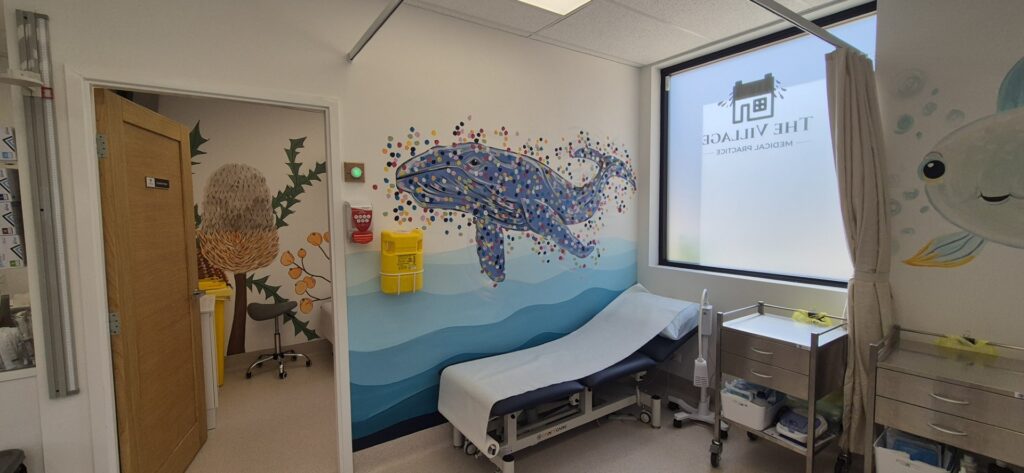
The Village Medical Practice opened in 2024 and is an innovative 14-GP general practice based in Harrisdale in the southern suburbs of Perth. One of its many innovations is that it offers barista-made coffees to patients and of course has fully embraced HotDoc’s Routine Requests.
Led by both Dr. Arbuckles’ with Dr. Stuart as Managing Director, and Dr Eleanor as Clinical Director, the practice operates out of 8 consult rooms and serves predominantly young professional couples and young families in one of Perth’s more affluent suburban areas.
The practice uses Best Practice and has all five Routine Request types activated: repeat prescriptions, medical certificates, pathology, imaging, and referrals. Not all 14 GPs are currently using Routine Requests. However, the intention is to transition everyone across as their confidence grows.
The challenge
Like many busy practices, The Village Medical Practice faced a familiar tension: patients with straightforward repeat needs were filling appointment slots and phone lines that could otherwise go to someone who genuinely needed to be seen. And with standard appointments priced at approximately $105, cost can be a barrier to patients accessing routine care, and the GPs felt uncomfortable charging the fee for such simple requests.
The Team at The Village Medical Practice were already alert to the risk. They acknowledged and saw fragmented services as a direct competitive threat — one that eroded their visibility over patient care. Routine Requests offered a way to stay competitive with the alternatives, saying:
“I lose that visibility over what’s being prescribed and how my patients are being cared for. Routine Requests allows me a way to directly compete with those services.”
- Dr. Stuart Arbuckle
How The Village Medical Practice use Routine Requests
Dr. Stuart personally handles up to 10 routine requests on any given working day, generating revenue for work that too often goes unpaid for GPs. Crucially, each request he handles creates an empty appointment slot that can go to someone who truly needs to come in, and which of course then generates further income.
“For me, that equates to 10 appointments that didn’t need to be booked, allowing those times to be made available to other patients. At the same time, it still generates a reasonable level of income for what is, in most cases, a relatively straightforward piece of work.”
- Dr. Stuart Arbuckle
Response times vary from 15 minutes on a quiet day to two or three days. The practice manages patient expectations clearly through upfront communication with patients.
A practice-level commitment
With 14 GPs across 8 consult rooms, some doctors work part time. To make sure each Routine Request is addressed in a timely way, our Practice Manager and her team actively monitor the dashboard and reallocate incoming requests to whichever GP is available — while still routing the vast majority to the patient’s own doctor.
Importantly, the practice does not monitor individual GP response times. The philosophy is one of clinical autonomy: a doctor may be waiting on test results before acting, and that’s legitimate. The Practice team’s job is to ensure coverage, not to chase speed.
“We’re not looking to meet particular [turnaround] targets because there could be some clinical information they’re waiting to hear. But Our Practice [Team] does monitor if a GP is not going to be present.”
- Dr. Stuart Arbuckle

Patient education leads to lower inappropriate request rates
The Village Medical Practice maintains an 86% approval rate, rejecting only 1 in every 10 to 15 requests. Dr Stuart attributes this to a combination of proactive patient education during consultations, clear communication about what each request type is for, and a patient demographic that tends to be health-literate and engaged.
The approach is clear but low-key: a brief mention in consultation that imaging, for example, is only available when there’s already an established surveillance pattern in place. When inappropriate requests do come in, Dr Stuart rejects them with a detailed explanation, which turns the refusal into a conversation rather than a dead end.
“I don’t tend to dwell on the details. I usually explain that there are five items that can be requested, and if it’s a repeat referral, it’s generally quite straightforward. The only area that occasionally requires clarification is imaging, where I briefly note that repeat scans are only arranged if there has been a prior agreement.”
- Dr. Stuart Arbuckle
Using all five Request types
The Village Medical Practice actively uses all five Routine Request types. Here’s their approach to educating patients about their uses cases for the less commonly used Routine Request types:
Pathology
- Routine annual bloods and monitoring bloods (e.g., PrEP for HIV prevention, 3-monthly)
- Patients on established monitoring schedules know exactly what they need and so does the GP
Imaging
- Only used where an established surveillance pattern already exists. E.g CT chest scans for a monitored lung lesion.
- Patients are told upfront: ‘When it’s time for your next scan, you can use Routine Requests’
Referrals
- Repeat referrals for established specialist relationships are straightforward
- New referrals require an appointment and patients understand this
The benefits and outcomes
The benefits at The Village Medical Practice are tangible across clinical, operational, and financial dimensions.
Protects appointment capacity
- 5–10 fewer unnecessary consultations per GP per day
- Those slots freed and filled patients with genuine clinical need
Generates revenue for work that would otherwise go unpaid
- Remuneration for administrative work that has traditionally been unpaid
Maintains continuity of care for routine services
- Patients stay with their known GP rather than going to external or other online providers
- Prescribing visibility retained — no blind spots from external services
- Communication opportunities: conditionals, nudges to book, medication reviews
- If a GP is on leave, the Practice Team redirects these requests to other GPs to spread the load
Dr Stuart is also candid about the value of the messaging flexibility of being able to send patients nuanced responses rather than a binary yes or no.
“I’ve provided your prescription for your blood pressure medication; however, I have not issued this additional script as it was supplied recently, and it would not be appropriate to provide another at this time. This flexibility allows us to make safe and appropriate prescribing decisions.”
- Dr. Stuart Arbuckle
Advice for other practices
One of the most practical insights Dr. Stuart shares is about timing. When GPs start introducing Routine Requests to patients in consultations, they shouldn’t expect an immediate flood of activity. Because most scripts are issued with multiple repeats, a patient introduced to the feature in January might not need to use it until July when their script runs out.
“The initial six-month period was probably quite slow in adoption. And then all of a sudden there’s the avalanche of patients coming through.”
- Dr. Stuart Arbuckle
For practices evaluating whether Routine Requests are ‘working’, this lag is important to understand. Volume builds gradually then compounds.
For practices thinking about introducing Routine Requests across their GP team, Dr Stuart’s advice is grounded in what worked at The Village Medical Practice:
- Introduce it to patients proactively during consultations. A brief, casual mention is enough.
- Set realistic expectations with GPs: adoption might start slow for the first 6 months as repeat scripts run down, then accelerates sharply
- Have the practice manager and their team monitor the dashboard and reallocate when GPs are away — this is the single most important operational step.
- Let resistant GPs cover a colleague’s requests temporarily; the financial reality tends to convert them faster than any argument.
- Be clear about what imaging and other less-common types are for upfront, to avoid inappropriate requests entirely.
We’re grateful to The Village Medical Practice for sharing their story!
Related customer stories
HotDoc is trusted by tens of thousands of GPs, specialists and dentists. Here’s what a few of them say.

How Whole Medicine Increased Bookings for Preventative Health Checks During COVID-19